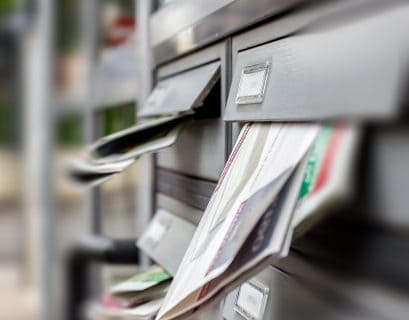
Digital campaigns might seem efficient, but when they stand on their own, they tell a different story. The average consumer sees up to 10,000 digital ads each day1, but they recall fewer than 1%2. And if they do see an ad that catches their eye, there’s no way to return to it later when they’re ready to act.
That’s where omnichannel direct mail shines. It adds a physical, memorable message to the consumer purchase journey with a tactile piece that can be returned to when the consumer is ready.
Tangible. Trusted. Trackable.
Let’s look at some of direct mail’s unique strengths, clear up common misconceptions, see how direct mail complements digital channels, and review easy-to-implement bridges that tie omnichannel direct mail to purchase results.
Direct Mail’s Unique Strengths
Direct mail has distinct, measurable advantages that digital channels cannot easily replicate. Before diving into omnichannel direct mail, it’s good to start with a clear view of what makes the direct mail channel different.
Why direct mail stands apart (and works so well):
- Tangibility that builds memory. A postcard on a kitchen refrigerator lasts days, not seconds. Texture, weight, and color help improve recall when the consumer is ready to make a purchase decision.
- Credibility that lowers friction. Direct mail is seen as more trustworthy than digital ads with 76% of consumers preferring to make purchase decisions based on direct mail rather than digital channels3.
- Household-level reach. With direct mail, you’re not just targeting one individual looking at one device. You’re engaging the entire team of purchase decision-makers: the researcher, the bill-payer, the order-placer.
- Predictable delivery windows. When your promotions depend on timing, reliable in-home dates help stabilize your campaign performance and balance out digital’s volatility.
Turn these strengths into results by pairing them with complementary omnichannel tactics: ensure your email and direct mail messages match, drive direct mail recipients to a mobile-first landing page, institute direct mail tracking that ties to digital behavior.
Common Misconceptions About Direct Mail
Believing in outdated assumptions causes some marketers to overlook direct mail. Today’s direct mail is data-driven, dynamic, and API-triggered. So, let’s reset your expectations.
What’s myth vs. reality today:
- Myth: “Direct mail is outdated.”
Reality: Today’s omnichannel direct mail is triggered by the same behavioral signals you use for email or retargeting (abandoned carts, browsing activity, lapsed customers, etc). - Myth: “You can’t track it.”
Reality: You can and should track direct mail. Use QR codes & PURLs for identifiable ties from your mail piece to online sessions; add unique codes and call tracking for phone and in-store purchases; run matchback reporting to credit sales conversions from particular households that come via search or direct URL. - Myth: “Only older audiences respond.”
Reality: Younger audiences actually respond to direct mail at the highest rate of all consumers. Response is driven by relevance, not age. Younger buyers do respond when the creative and timing line up with their needs and preferences. - Myth: “It’s too expensive.”
Reality: Too many marketers look at direct mail on a cost per piece evaluation rather than actual results. Almost every study to-date shows that direct mail delivers higher ROI, higher conversion rates, and higher average order values than any other channel.
How Omnichannel Direct Mail Complements Digital
One of direct mail’s greatest qualities is its ability to enhance the response rates of all other channels in your campaign. Integrating direct mail into an omnichannel campaign (hence, omnichannel direct mail) lifts response rates by as much as 35% compared to digital-only4.
Three ways omnichannel direct mail makes digital work harder
Start by understanding what you’re working with: direct mail is the high-trust anchor in your omnichannel direct mail mix.
- Direct mail enforces trust. Email primes your message; a direct mail piece lands a few days later with the same CTA; paid social sustains visibility during the mail delivery window; the landing page mirrors the mail piece. That consistency reduces cognitive load, increases the trust factor, and accelerates action.
- Direct mail expands qualified reach. Postal/household-level data can be used to identify audiences that resemble your highest-lifetime-value buyers, even when cookie-capable digital channels can’t. Feeding the responders back into your audience allows for modeling and scalability.
- Direct mail stabilizes ROI. Digital ad auctions are constantly fluctuating and CPMs spike during high-volume seasons. It’s hard to predict when the social algorithms will get updated or new privacy measures put in place. Contrast that with direct mail’s reliable delivery windows that let you time your offers with confidence.
Mini comparison: digital-only vs. omnichannel direct mail
Bridging Online and Offline Touchpoints
Bridging refers to the specific ways you connect your omnichannel direct mail piece to a digital or offline action. Put simply, how will you know the purchase was driven by direct mail?
The best way to begin is with the bridge that removes the most friction for your audience: a scannable QR code included with the call-to-action (CTA), leading to a complementary webpage that is built on direct marketing best practices.
- QR + PURL for response and attribution. Place a large QR code near the primary CTA; send to a dedicated landing page that mirrors the mail piece. Use PURLs or parameters to prefill forms, personalize the content, and capture relevant analytics.
- Email timing aligned to direct mail delivery dates. If mail pieces will get delivered on day 6–8, drop a reminder email on day 7 and a “last chance” on day 9, all with the same headline and offer to reinforce recall.
- Social reinforcement during the mail window. Activate a paid social campaign targeting your mailed segment during predicted in-home dates. Reuse the hero image and CTA to create “surround sound” messaging.
- Call tracking and store tie-ins. Add a unique phone number or POS code for call/in-store conversions. Train associates to request the code; include it in weekly matchback reporting so those offline sales get credited to direct mail.
Match Direct Mail Format to Purchase Decision
Different purchase types call for different direct mail types.
- Low-consideration/short sales cycle: A bold postcard with a single QR target and time-bound incentive is often enough.
- Higher consideration/longer sales cycle: A letter package or mini-catalog can carry comparison charts, testimonials, or financing details that don’t fit in an email.
Match Purchase to Direct Mail
There are several ways to tie purchases to your omnichannel direct mail piece:
- Identifiable links: QR codes, PURLs, and call tracking for direct attribution.
- Household matchback: Orders to addresses on your direct mail list within a predefined lookback (e.g., 30 days) can attribute credit to direct mail.
- Holdout testing: Keep a small, no-mail control list to quantify incrementality from the direct mail recipient list.
- Starter KPIs: Response rate from mailed households, landing-page conversion, matchback revenue, CAC and LTV trend.
Remember, not everyone will scan the QR code or call the phone number in your direct mail piece. Some will Google your brand or directly browse your URL instead. Your measurement plan should take this into consideration and have a means for crediting direct mail.
Omnichannel Direct Mail Quick Takeaways & Next Steps
When launching your first omnichannel direct mail campaign, start simple and scale when ready. Choose one audience, one offer, two channels (try starting with email and direct mail), and one clear KPI. Prove direct mail’s lift with tracking and matchback. Then layer social reinforcement, a second trigger (e.g., lapsed 60/90 days), or a deeper format for considered purchases.
Ready to Get Going?
The sg360° omnichannel direct mail experts are standing by! Request your free consultation today!
Consultation Request
Sources
- https://b9solution.com/how-many-ads-do-we-see-a-day-top-trends-statistics/
- https://www.digitalsilk.com/digital-trends/how-many-ads-do-we-see-a-day/
- https://www.postalytics.com/blog/why-consumers-trust-direct-mail-marketing/
- https://www.marketingprofs.com/articles/2018/34741/best-practices-and-tips-for-integrating-direct-mail-into-email-marketing-campaigns